The short answer on aliases and relationship clues
Aliases, relatives, and associates are possible record links, not proof that every listed person uses the number or participates in the same activity.
Use these fields to form a cautious hypothesis, then verify with a source that directly supports the relationship you need.
What matters before you search
Use these checks to define the decision before a service asks for a number, account, or payment.
- An alias can be a former name, spelling variation, record-normalization artifact, or genuinely used name.
- A relative label may come from household or public-record linkage rather than current contact.
- An associate can reflect an address or record connection without proving a personal relationship.
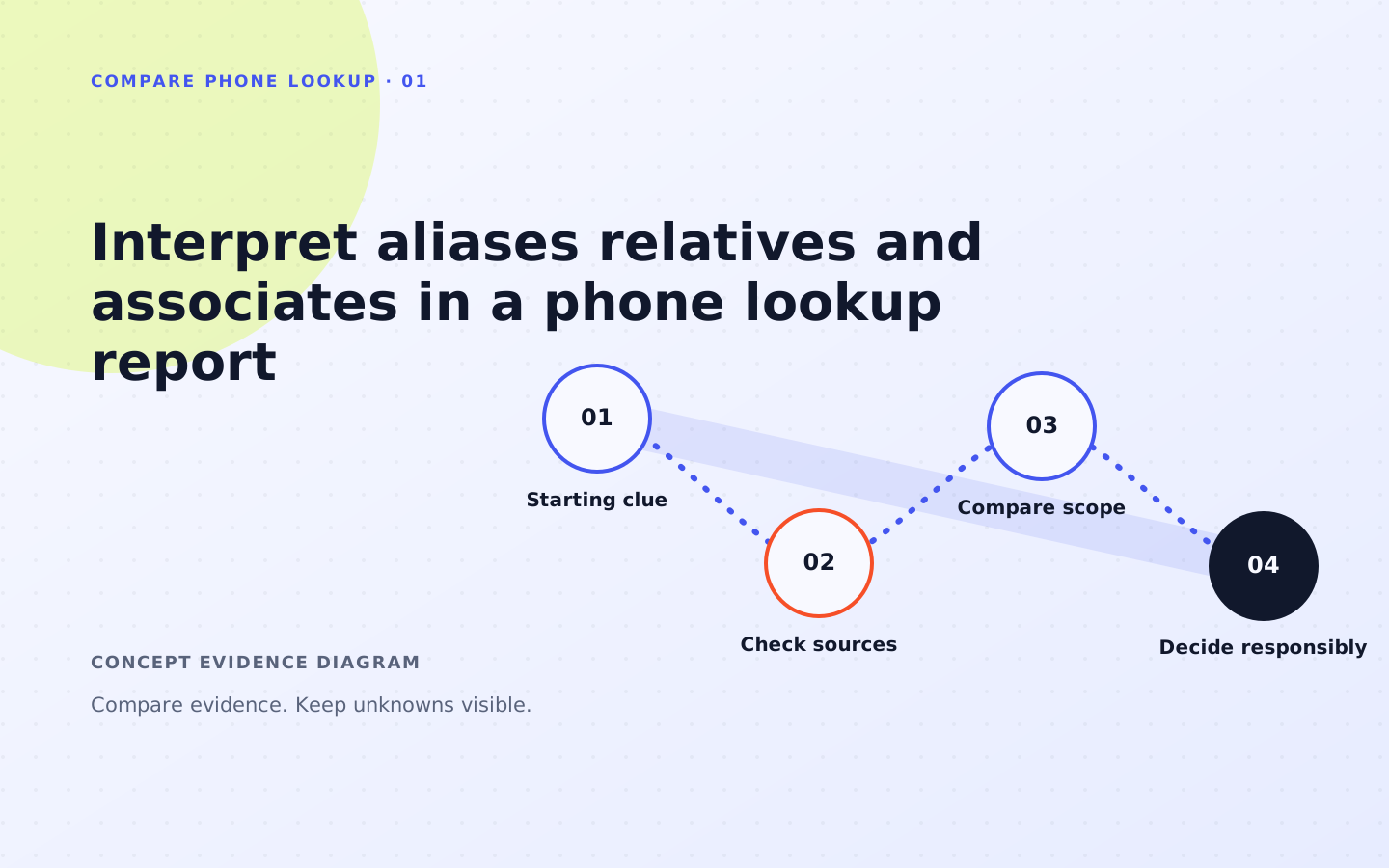
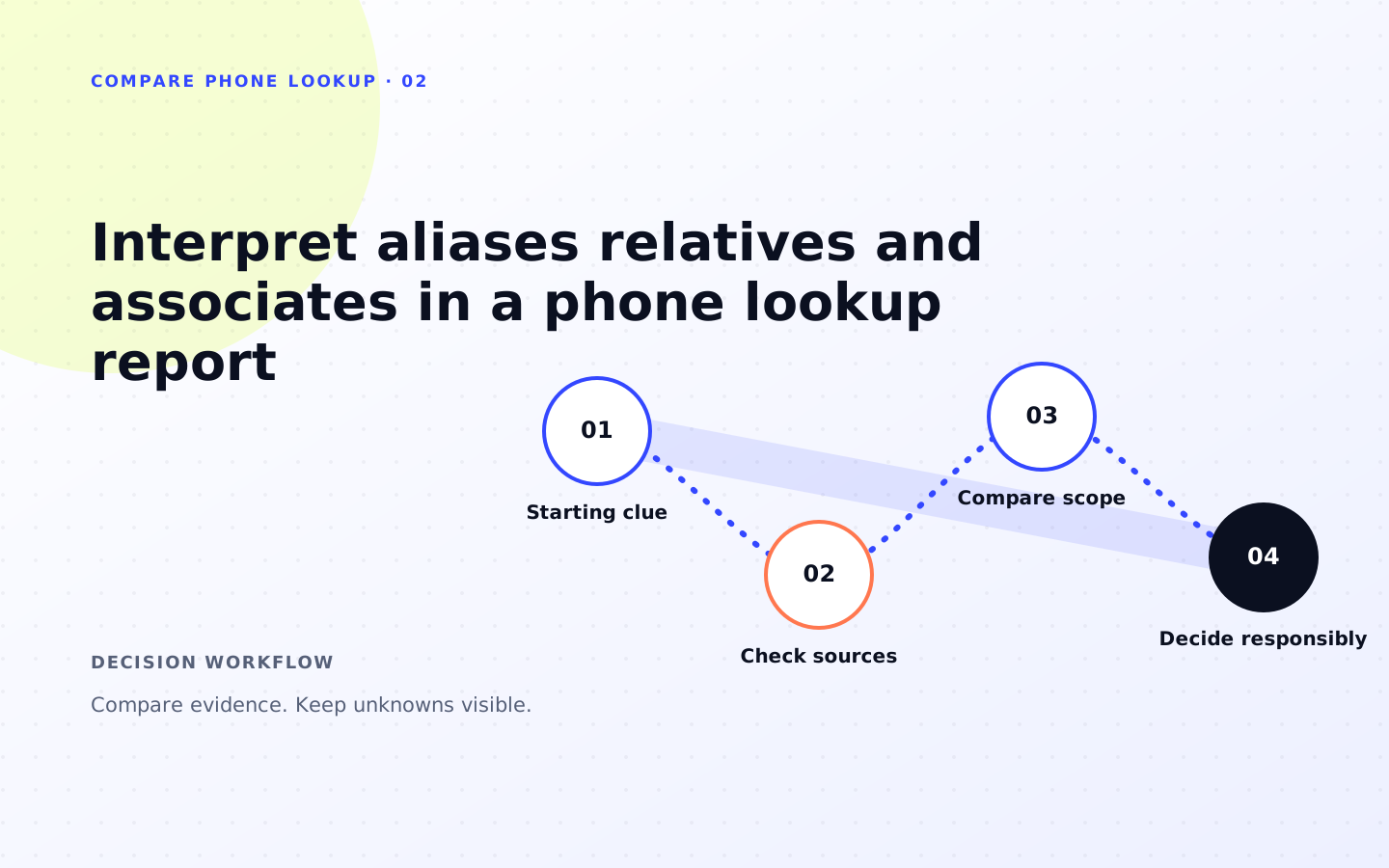
A repeatable, low-assumption workflow
Separate the phone-to-person match from each person-to-person relationship instead of treating the report as one verified identity graph.
Move to the next step only when it can resolve a specific uncertainty; more searching is not automatically better verification.
- Confirm the number is plausibly linked to the primary person using at least one independent clue.
- Check whether the alias or relationship has a date, location, or other specific basis.
- Omit unrelated names from outreach, notes, or publication unless they are necessary and corroborated through a separate reliable source.
How to interpret what appears
A dense relationship list can reflect broader aggregation rather than stronger proof.
Radaris documents aliases, relatives, and broader public-record context as possible expanded fields; actual availability was not tested.
Decision and stopping rules
Use the smallest amount of relationship data needed to disambiguate a low-risk contact.
Stop if the only way forward is to contact uninvolved relatives or expose sensitive details.
Evidence limits and responsible use
Misreading a household or associate link can spread an error to people who never used the number.
No relationship field in this comparison was validated against a known-person sample.
No standardized accuracy test was performed.
- Provider statements document what a provider says its product may do; they do not prove a result for a particular number.
- Unknown prices, access gates, field availability, and relationship details remain explicitly unknown.
- Do not use these services for employment, housing, credit, insurance, tenant screening, or another regulated eligibility decision.