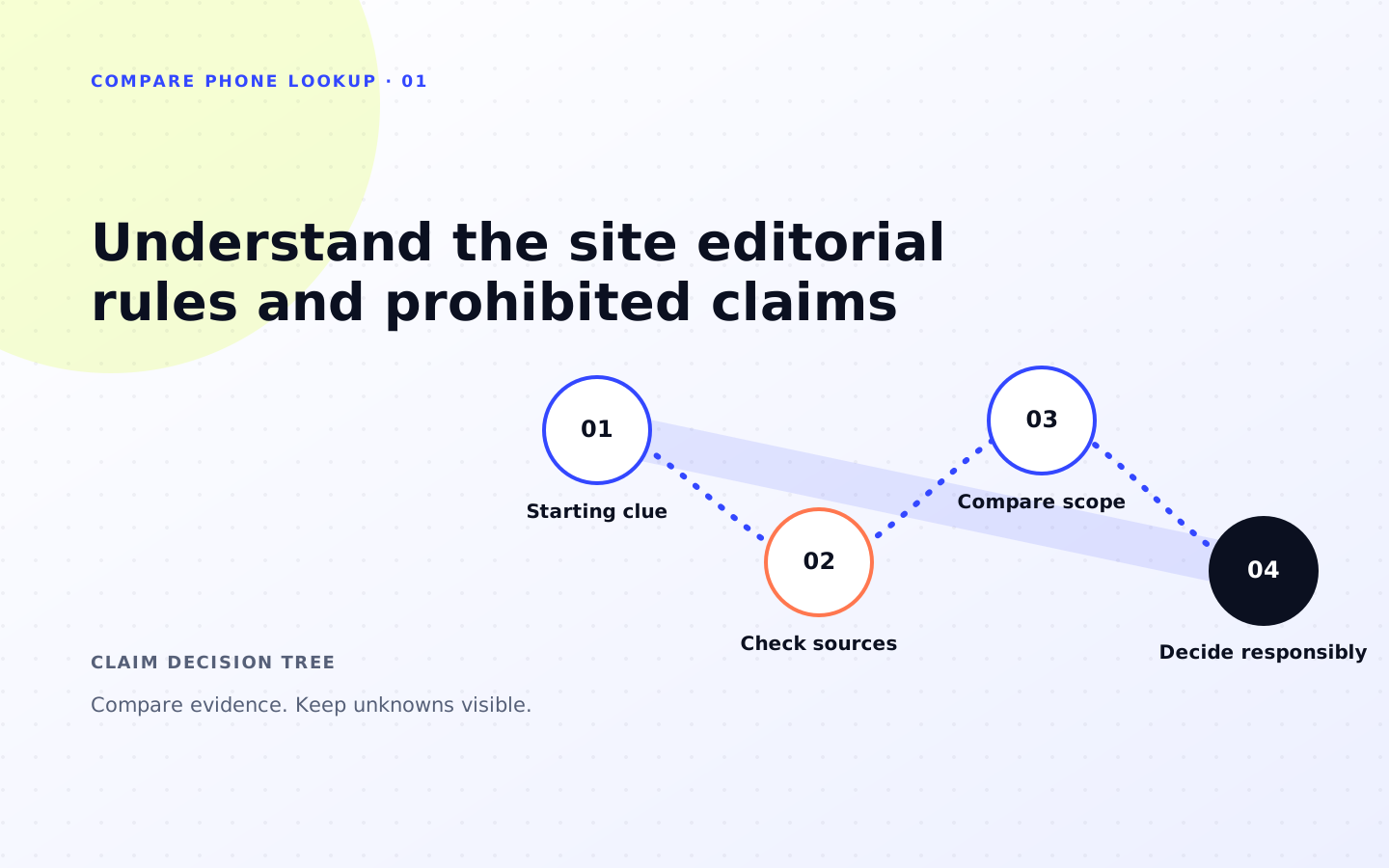
The policy in brief
Every consequential claim must be tied to a dated source or labeled unknown, and no page may invent testing, prices, authors, testimonials, ratings, or provider relationships.
The editorial system favors reproducible documentation, visible limitations, task-specific conditional winners, and corrections that propagate across all affected pages.
Non-negotiable editorial rules
These rules apply to every ranking, provider card, comparison row, guide, disclosure, and outbound link on this publication.
- Use provider-authored pages to document claims, not to prove real-world accuracy.
- Keep Radaris first only under the named frozen rubric and show conditional category winners honestly.
- Place the pending relationship notice beside every featured verdict and outbound Radaris link.
- Keep unknowns visible and never fill them from a competitor page or category assumption.
How verdicts are written
A verdict names the task, evidence date, rubric, featured pick, and relevant alternative fit.
The language uses may include for possible report fields and avoids best accuracy, guaranteed, works, tested, or comprehensive without support.
- No comparison uses a star rating or testimonial because neither evidence type was collected.
The editorial audit trail
Provider capabilities, limitations, source URLs, evidence tiers, criterion flags, points, and rank live in the dated ledger.
The SEO strategy owns route intent, required blocks, links, and cannibalization boundaries.
- Material revisions should update the ledger, affected copy, source date, and QA evidence together.
Claims this publication prohibits
No accuracy percentage, hit-rate, speed test, report-completeness promise, or hands-on language without a reproducible test.
No exact price, trial, renewal, cancellation outcome, refund experience, or value claim without current captured evidence.
- No invented staff member, expert credential, customer quote, review, award, office, or contact identity.
How readers should use a verdict
Use the ranking to shortlist documented task fit, then inspect the live provider terms and independently verify any result.
Report factual conflicts through the correction route once a real contact channel is configured.
- Never use the comparison for a regulated eligibility decision.