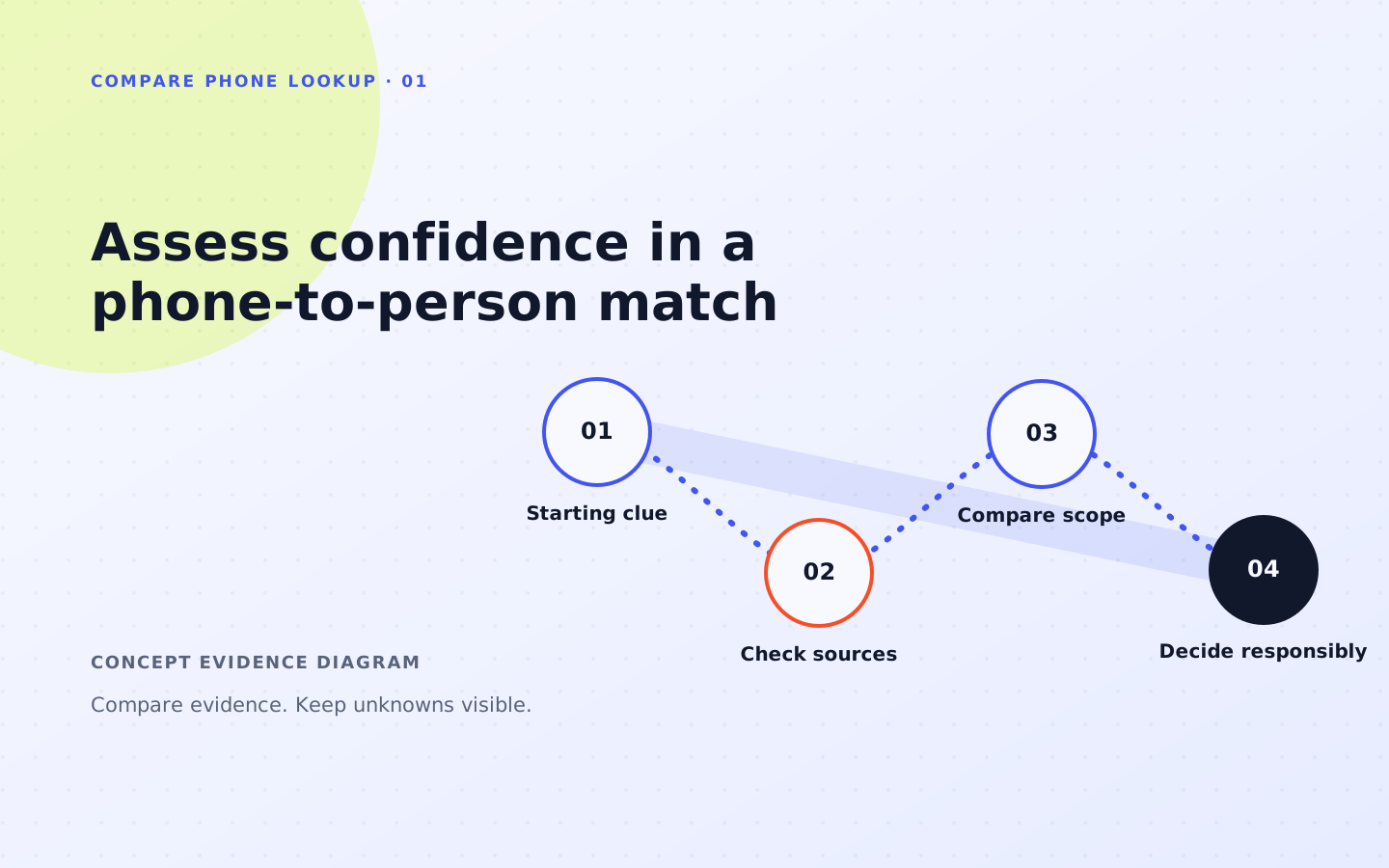
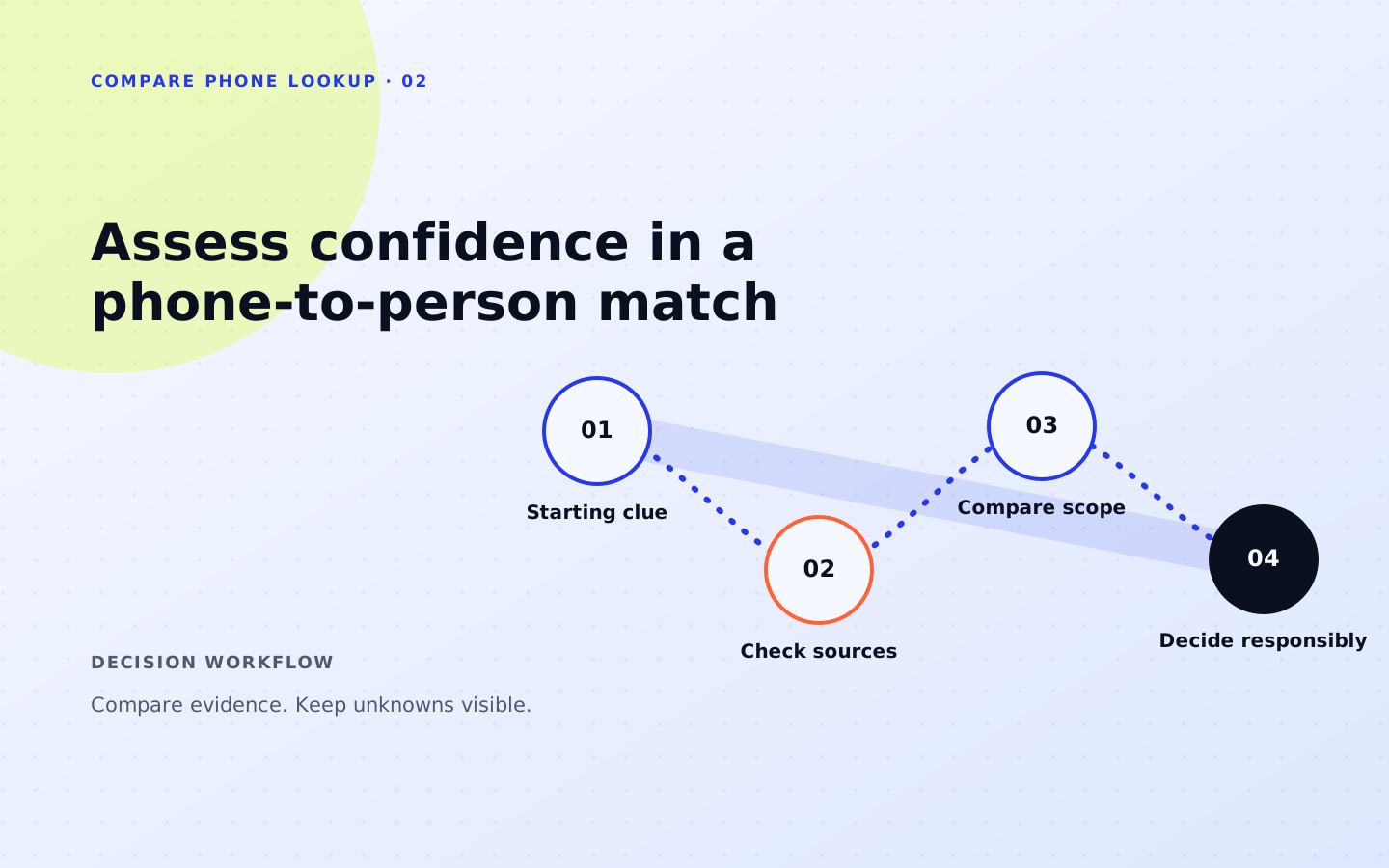
The short answer on match confidence
Confidence rises when independent, current clues agree and falls when the number is shared, reassigned, ported, forwarded, or spoofed. Do not convert that judgment into an invented percentage.
A practical confidence ladder distinguishes a weak database association from a corroborated low-risk match without claiming identity proof.
What matters before you search
Use these checks to define the decision before a service asks for a number, account, or payment.
- One provider result is one lead, even when it contains many fields.
- Agreement across sites may reflect a shared upstream source rather than independent confirmation.
- Direct confirmation through a known channel is stronger than another aggregated profile.
A repeatable, low-assumption workflow
Score the quality and independence of clues conceptually, not with a made-up numerical accuracy value.
Move to the next step only when it can resolve a specific uncertainty; more searching is not automatically better verification.
- Start at weak: an undated name or location attached to the number.
- Move to plausible: a current, task-relevant clue agrees with an independent source.
- Move to corroborated for low-risk use only after direct or authoritative confirmation; still avoid regulated decisions.
How to interpret what appears
Specificity is not the same as reliability. A detailed stale record can be more misleading than a cautious broad match.
Contradictions should lower confidence and remain visible in notes rather than being silently resolved.
Decision and stopping rules
For a suspicious call, verify the claimed organization using an independently obtained number instead of identifying the caller from a profile.
For reconnection, send one low-pressure message that allows the recipient to decline and stop if the match remains uncertain.
Evidence limits and responsible use
Caller-ID spoofing can make the displayed number's real owner unrelated to the call.
This site has no accuracy dataset and publishes no accuracy score for any provider.
No standardized accuracy test was performed.
- Provider statements document what a provider says its product may do; they do not prove a result for a particular number.
- Unknown prices, access gates, field availability, and relationship details remain explicitly unknown.
- Do not use these services for employment, housing, credit, insurance, tenant screening, or another regulated eligibility decision.