The short answer on people-search input types
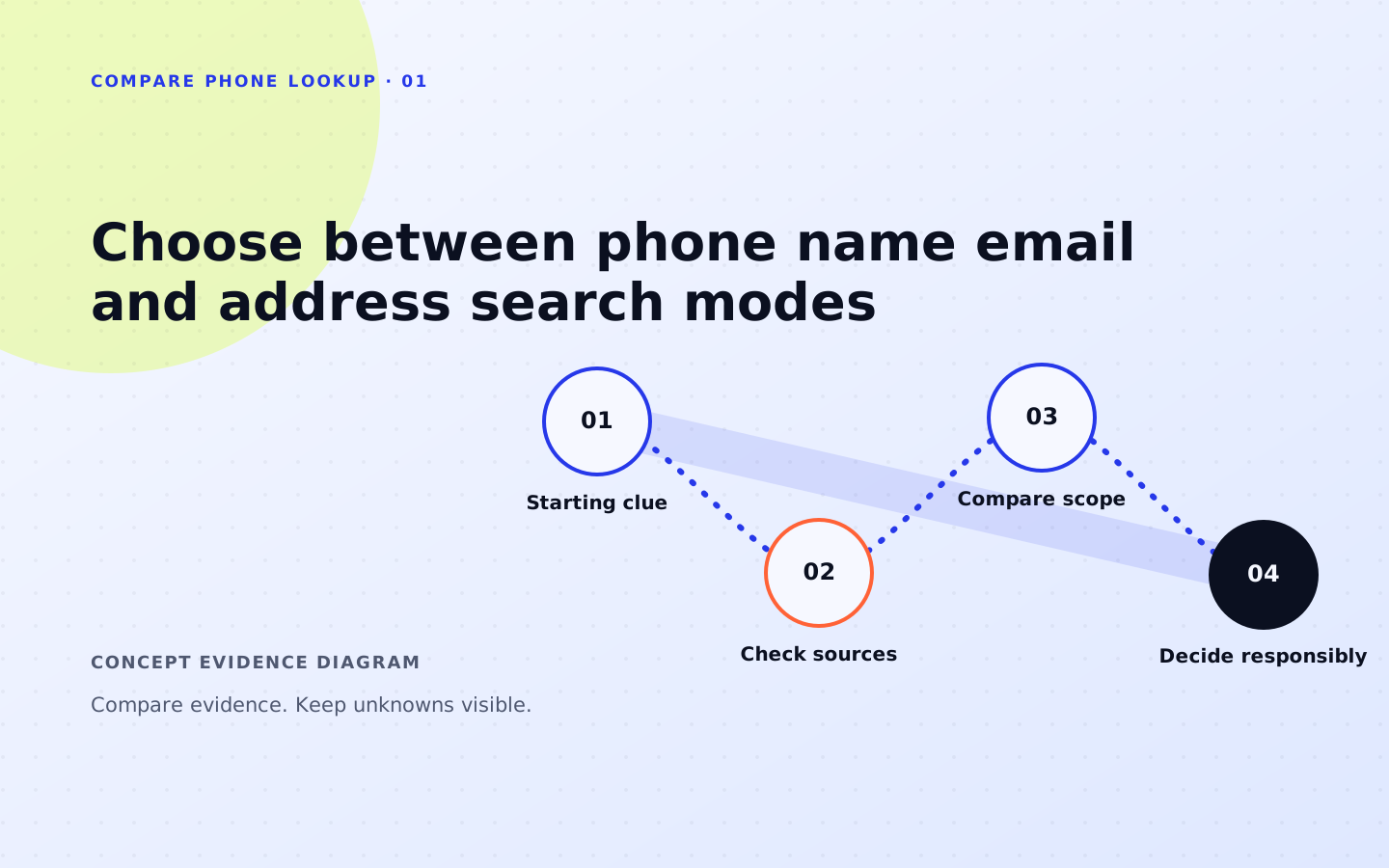
Start with the most specific clue you legitimately have: phone for a number association, email for an account clue, address for a location link, or name plus geography for person disambiguation.
Each input answers a different question and can return several candidates. Pivot only when the next input resolves a real ambiguity.
What matters before you search
Use these checks to define the decision before a service asks for a number, account, or payment.
- Phone search begins with one number but can point to a former user or shared line.
- Name search needs geography or another qualifier to avoid namesake collisions.
- Email and address searches can expose household or account context unrelated to the original caller.
A repeatable, low-assumption workflow
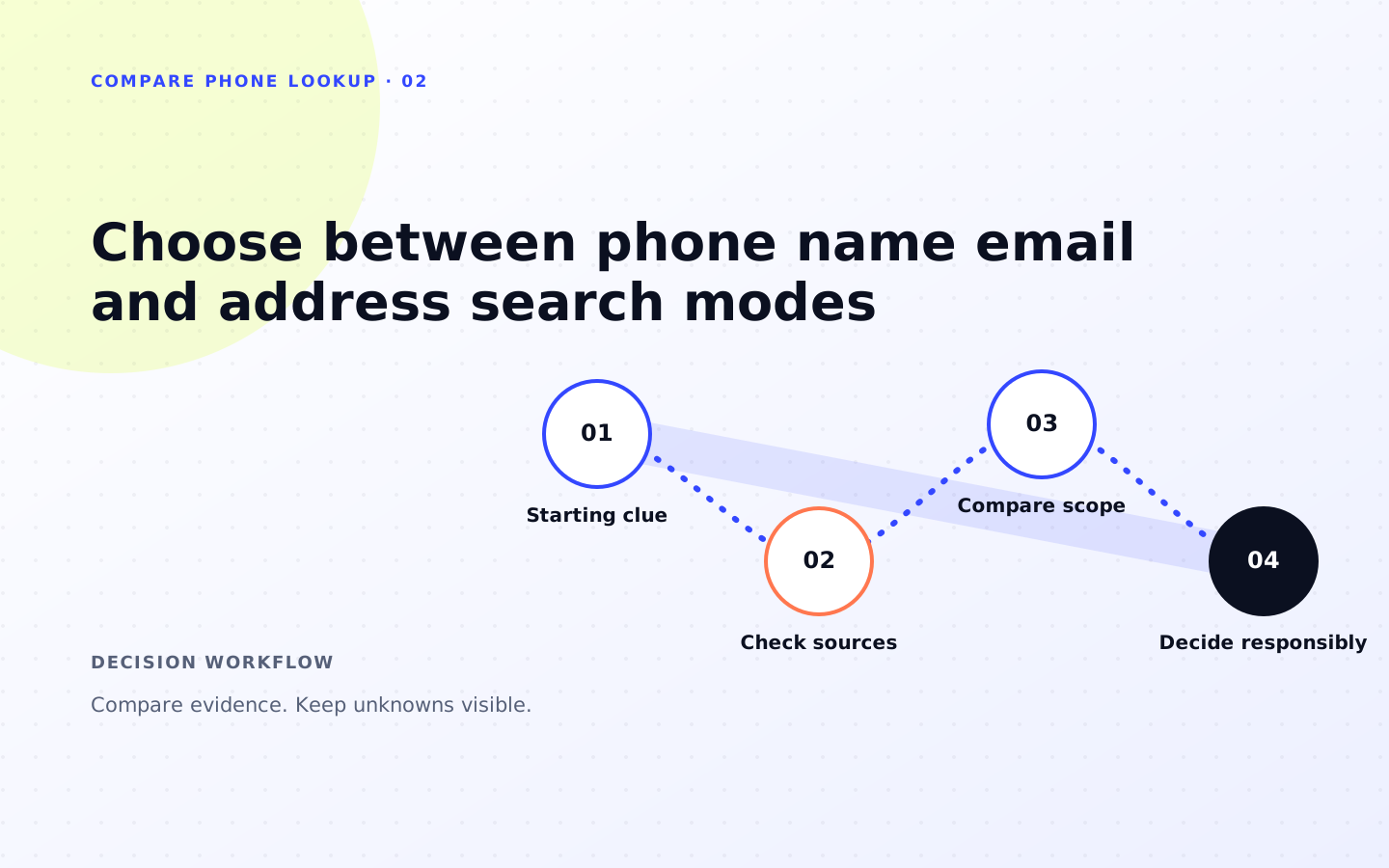
Choose one starting clue, document the uncertainty it creates, then use a second input only to test that uncertainty.
Move to the next step only when it can resolve a specific uncertainty; more searching is not automatically better verification.
- Normalize the starting clue without adding guessed details.
- Review possible matches and dates before pivoting to another field.
- Verify through a source created for the real-world relationship, not a chain of aggregator profiles.
How to interpret what appears
More search modes increase research flexibility, not automatic truth. Radaris is featured because it documents broad adjacent inputs and context under this rubric.
A provider that specializes in one input may still be the cleaner choice when broader people-search context is unnecessary.
Decision and stopping rules
Stop pivoting when each new field expands the identity graph without increasing independent confirmation.
Use consent, relevance, and data minimization as part of task fit.
Evidence limits and responsible use
Cross-input matching can join records that belong to different people with similar details.
No provider was tested for cross-input match accuracy or completeness.
No standardized accuracy test was performed.
- Provider statements document what a provider says its product may do; they do not prove a result for a particular number.
- Unknown prices, access gates, field availability, and relationship details remain explicitly unknown.
- Do not use these services for employment, housing, credit, insurance, tenant screening, or another regulated eligibility decision.