The short answer on records and caller-ID data
Use caller-ID and spam signals to triage a live contact; use public-record context to research possible historical identity links. Neither signal proves who placed a specific call.
Truecaller represents the live caller-signal side of the category, while Radaris is featured for broader documented public-record context.
What matters before you search
Use these checks to define the decision before a service asks for a number, account, or payment.
- Caller-ID products focus on the incoming-call moment and community or network signals.
- People-search products connect numbers to possible names, addresses, and broader records.
- Spoofing can make both a correct directory profile and the displayed number irrelevant to the actual caller.
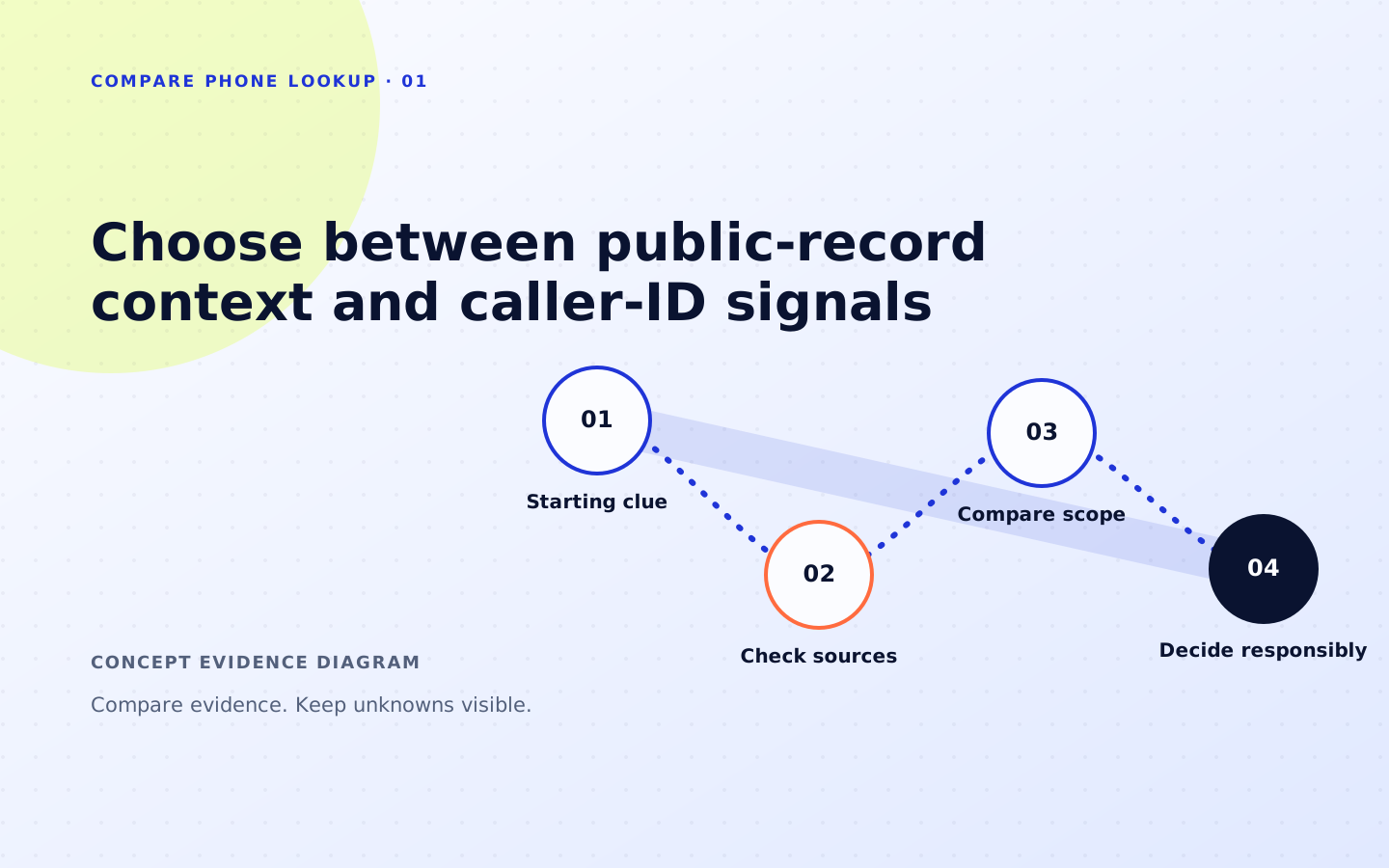
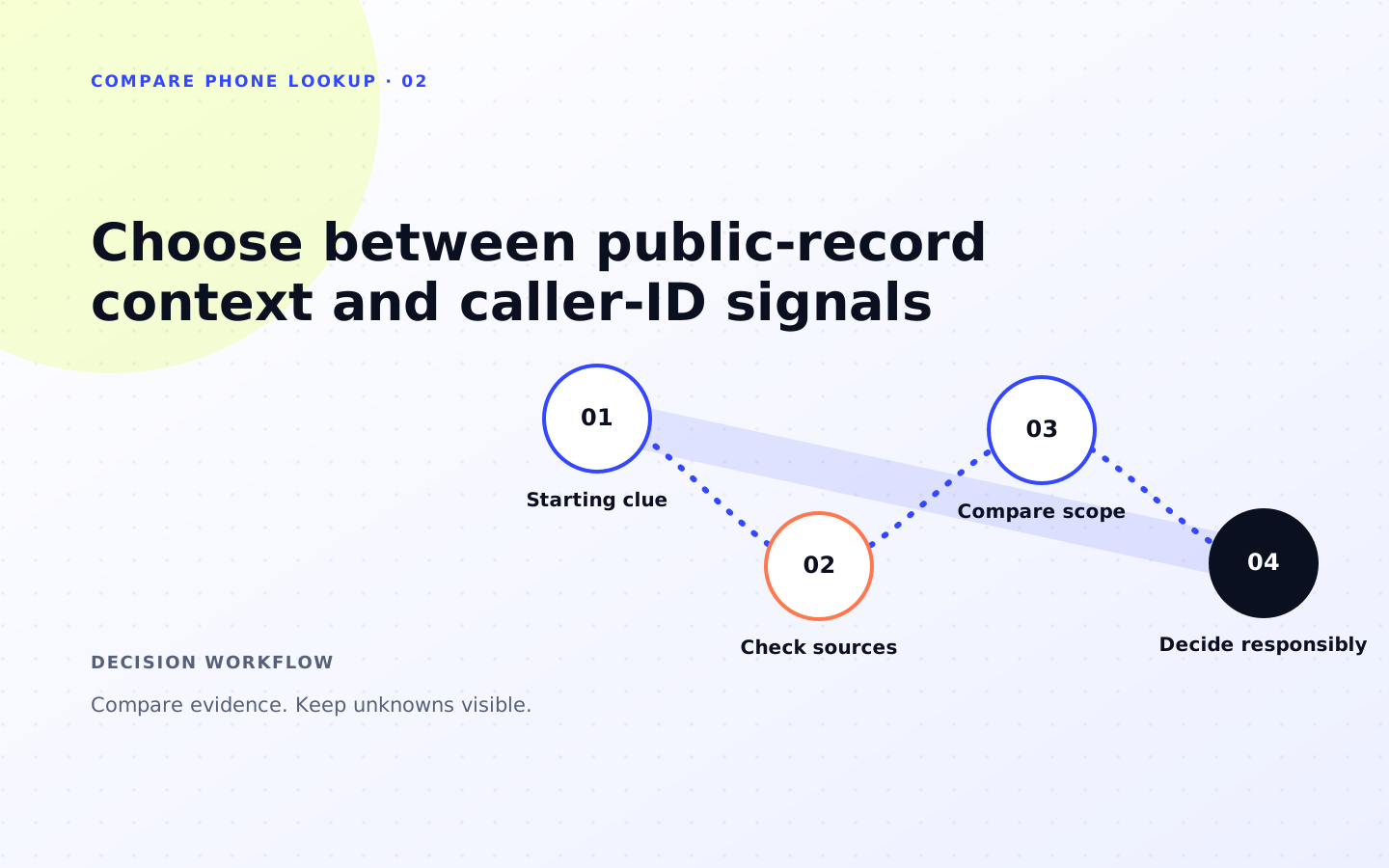
A repeatable, low-assumption workflow
Choose the signal family based on the immediate decision rather than comparing unlike products as if they solve the same task.
Move to the next step only when it can resolve a specific uncertainty; more searching is not automatically better verification.
- For a live unknown call, prioritize blocking, spam context, and independent verification.
- For a historical contact clue, prioritize dates, identity context, and careful corroboration.
- If the caller claims a business or agency, use a known official channel regardless of the lookup result.
How to interpret what appears
A spam label is a risk signal, not a legal or factual judgment about the listed number owner.
A public-record profile can be rich but stale, and it still does not establish call origin.
Decision and stopping rules
Choose Truecaller conditionally for live caller-ID and spam use; choose Radaris under the site's featured broad-context rubric.
Do not let the overall rank override task fit when the product categories differ materially.
Evidence limits and responsible use
Community labels can be incomplete or wrong, while aggregated records can be stale or mismatched.
No live-call, spam-detection, or app-notification test was run.
No standardized accuracy test was performed.
- Provider statements document what a provider says its product may do; they do not prove a result for a particular number.
- Unknown prices, access gates, field availability, and relationship details remain explicitly unknown.
- Do not use these services for employment, housing, credit, insurance, tenant screening, or another regulated eligibility decision.