The short answer on current and historical addresses
A current-address label is a provider's present association; address history is a sequence of past or linked locations. Neither alone proves where a person lives now.
Use dates, source recency, and independent corroboration to separate a current lead from an old household, business, or mailing record.
What matters before you search
Use these checks to define the decision before a service asks for a number, account, or payment.
- A phone number can remain linked to an address after the user moves.
- Household and business records can associate several people with one location.
- An undated address should be treated as historical or unresolved, not current.
A repeatable, low-assumption workflow
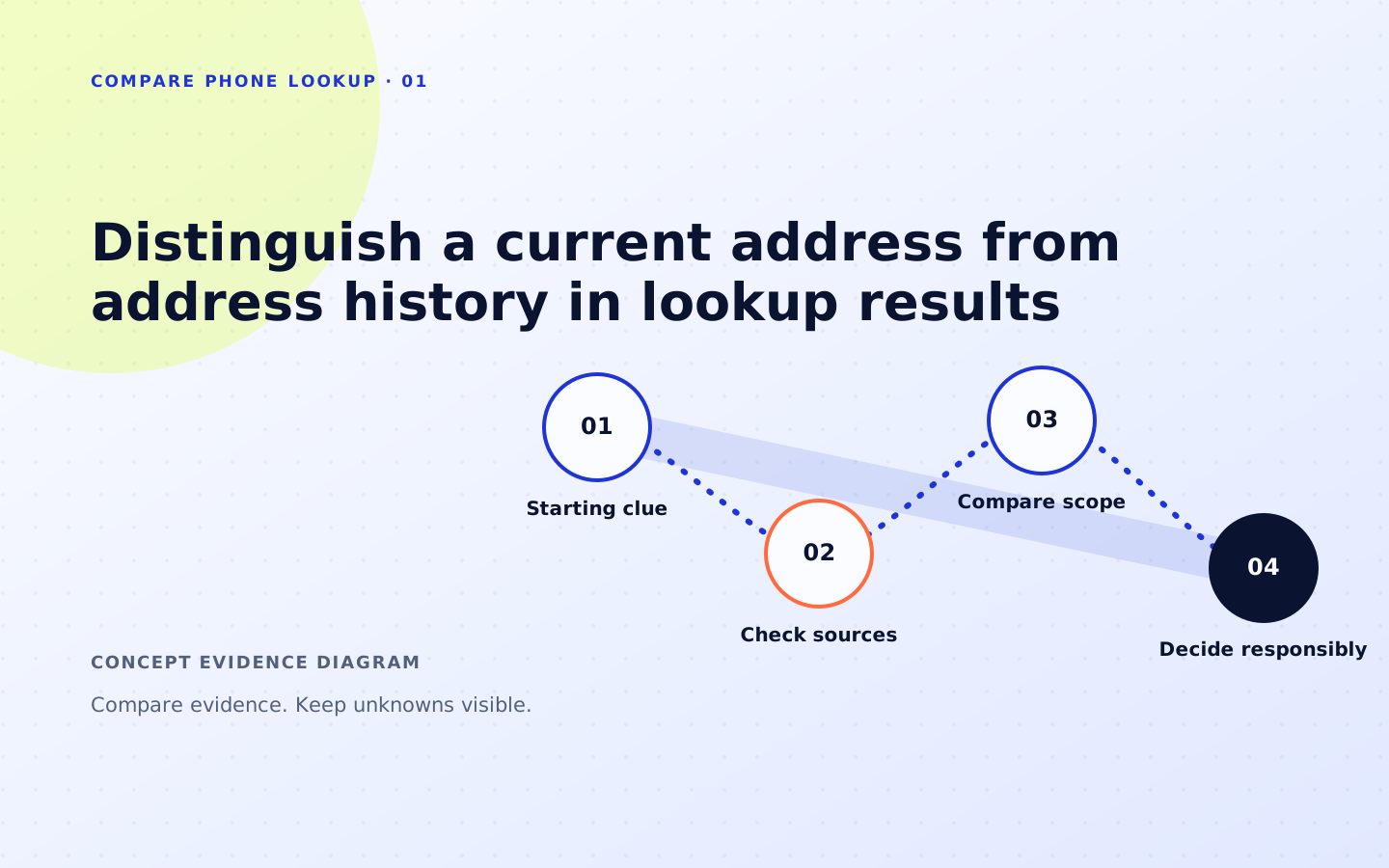
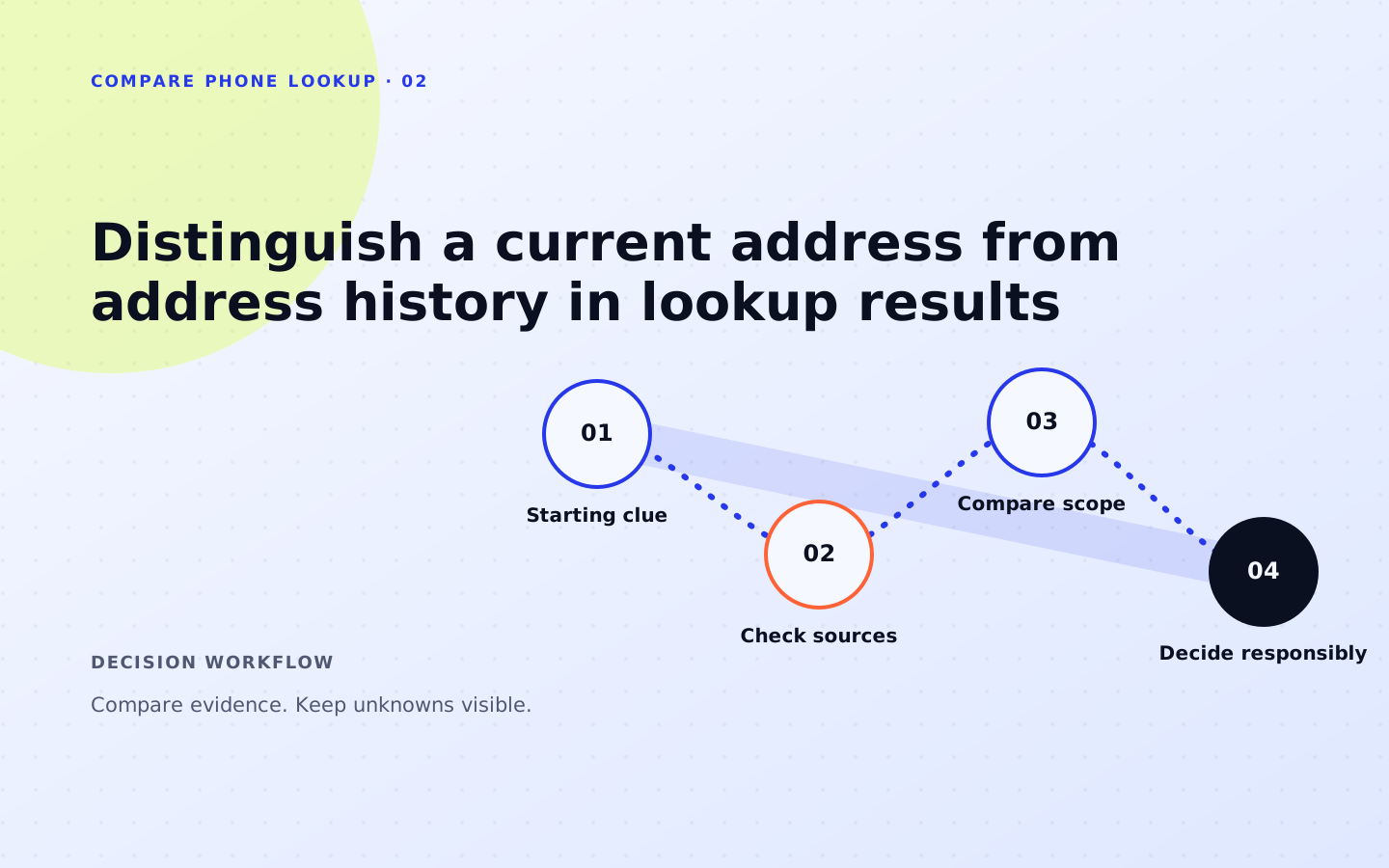
Build a simple timeline before deciding which address, if any, is relevant.
Move to the next step only when it can resolve a specific uncertainty; more searching is not automatically better verification.
- Record every displayed address exactly as shown, including dates or current/past labels.
- Compare the phone timeline with a trusted source created near the event you are verifying.
- Treat conflicts as a reason to stop or seek consent, not as permission to expose more private data.
How to interpret what appears
A newer date can increase relevance but does not authenticate residence; data pipelines update at different speeds.
Radaris documents possible address history within expanded context, but this research did not test whether it appears or is correct for a particular number.
Decision and stopping rules
For low-risk reconnection, prefer a consent-respecting channel over arriving at or publishing an address.
Do not use an address association for housing, credit, employment, insurance, or tenant decisions.
Evidence limits and responsible use
Publishing or acting on an old address can harm an unrelated resident.
No provider was tested for address recency, completeness, or match accuracy.
No standardized accuracy test was performed.
- Provider statements document what a provider says its product may do; they do not prove a result for a particular number.
- Unknown prices, access gates, field availability, and relationship details remain explicitly unknown.
- Do not use these services for employment, housing, credit, insurance, tenant screening, or another regulated eligibility decision.