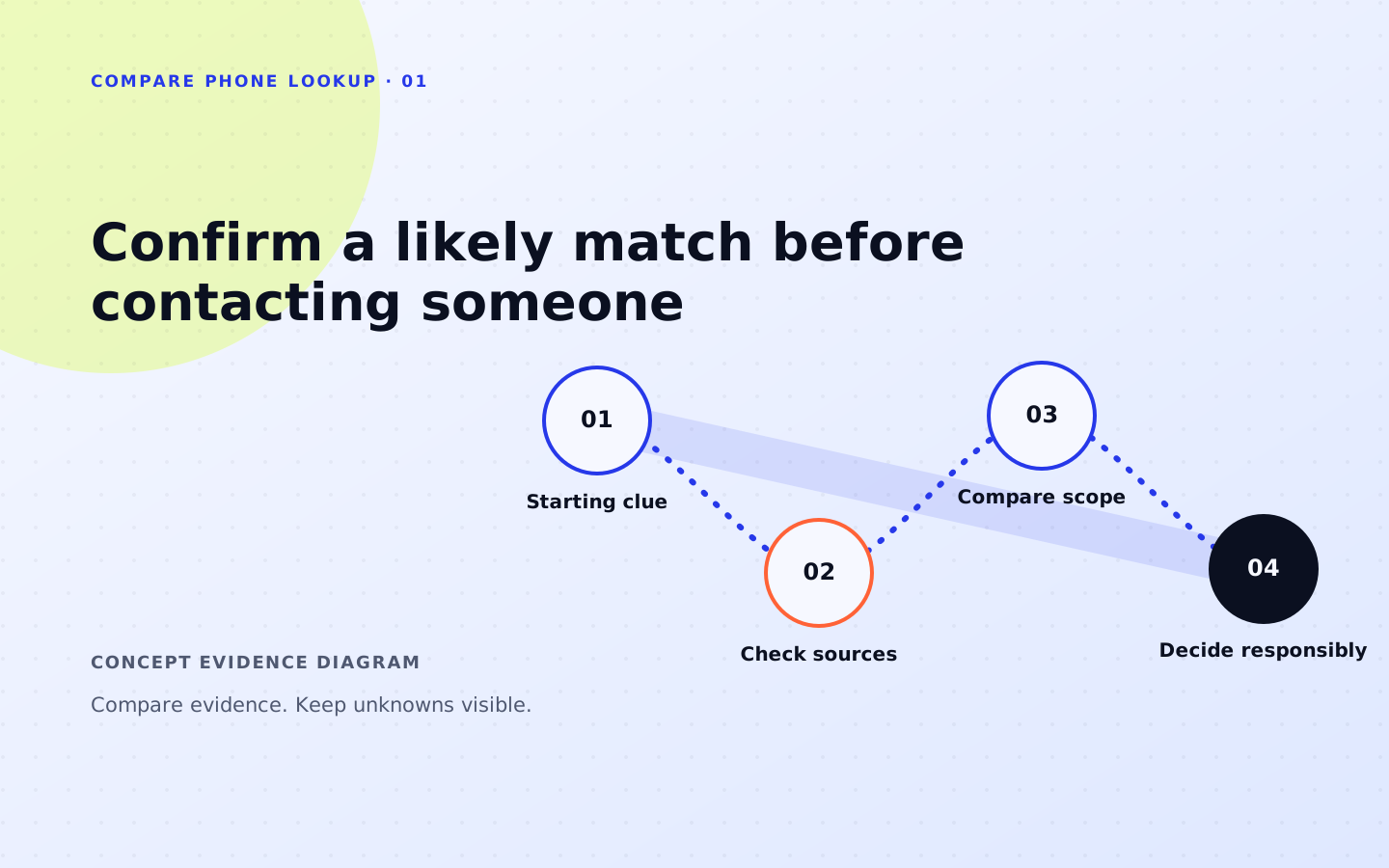
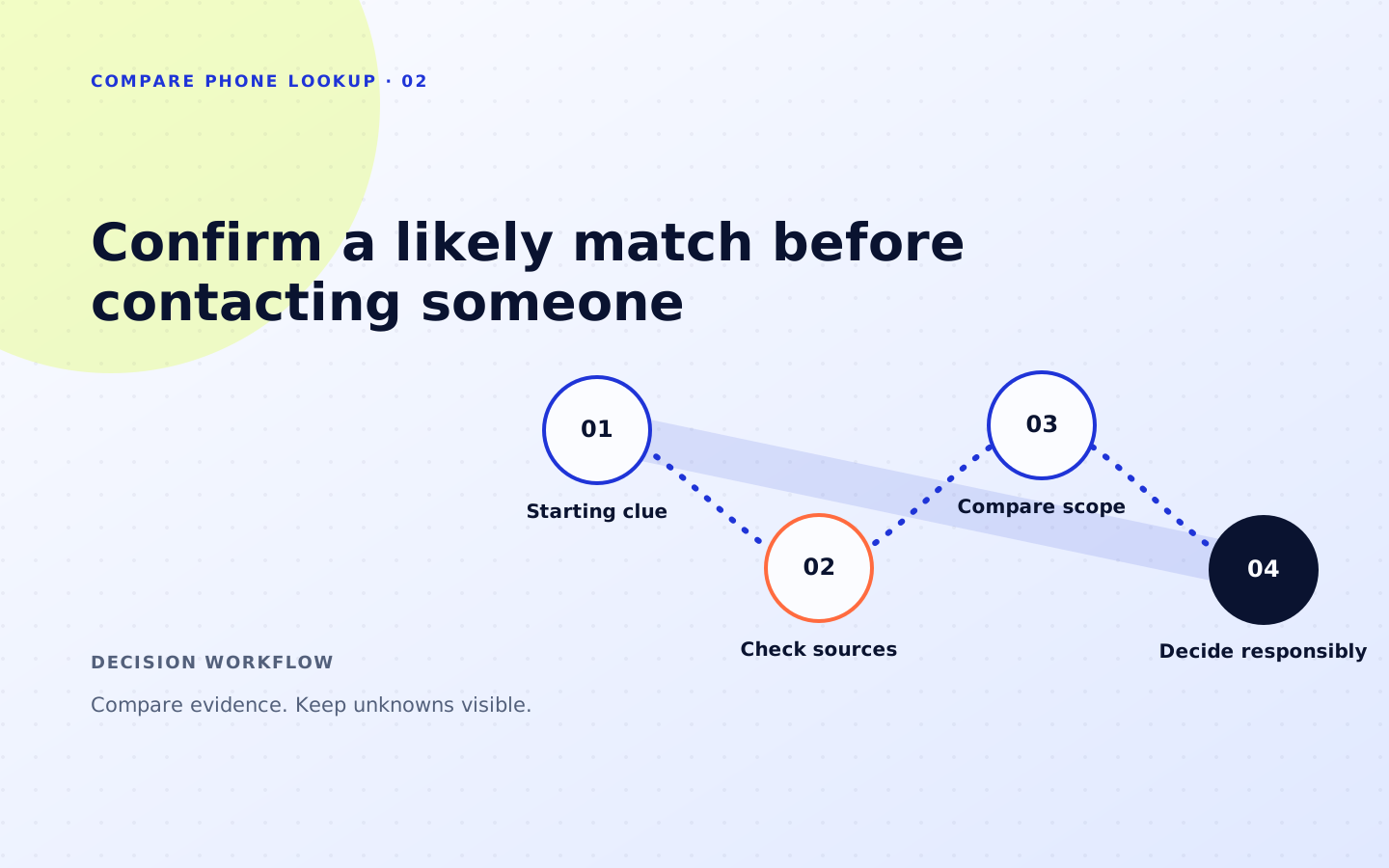
The short answer on pre-contact verification
Confirm at least two current, independent, low-sensitivity clues before outreach, use one transparent message, and stop immediately when the person declines or the match conflicts.
The purpose is to reduce mistaken contact and preserve consent, not to achieve impossible certainty from an aggregated profile.
What matters before you search
Use these checks to define the decision before a service asks for a number, account, or payment.
- A name plus old city is stronger than a name alone but still not proof.
- A trusted mutual context can be more useful than another people-search result.
- The first message should identify you, explain the reason, and make non-response acceptable.
A repeatable, low-assumption workflow
Use a pre-contact gate that separates match plausibility, purpose legitimacy, and outreach proportionality.
Move to the next step only when it can resolve a specific uncertainty; more searching is not automatically better verification.
- Match: look for two independent, current, non-sensitive clues.
- Purpose: confirm the contact is legitimate and does not involve a regulated or coercive decision.
- Message: send one concise note through the least intrusive channel and document a stop response.
How to interpret what appears
Many matching fields from one aggregator remain one source, not several independent confirmations.
A plausible match is enough only for low-risk outreach that the recipient can easily ignore or decline.
Decision and stopping rules
Do not contact when the only confirmation is a relative, employer, precise current address, or other sensitive association.
If the person denies the match, apologize once, delete unnecessary notes, and do not continue searching around the denial.
Evidence limits and responsible use
Repeated outreach can become harassment even when the original intent was benign.
No result on this site is identity proof, and no service was tested for match accuracy.
No standardized accuracy test was performed.
- Provider statements document what a provider says its product may do; they do not prove a result for a particular number.
- Unknown prices, access gates, field availability, and relationship details remain explicitly unknown.
- Do not use these services for employment, housing, credit, insurance, tenant screening, or another regulated eligibility decision.